Social media has become one of the most powerful marketing tools available to businesses today. Whether you’re a local retailer, service provider, restaurant, or e-commerce brand, social platforms offer opportunities to increase visibility, engage customers, and drive revenue.
However, many businesses fail to achieve meaningful results from social media because they make common strategic mistakes. Simply posting content isn’t enough. Success requires planning, consistency, audience understanding, and ongoing optimization.
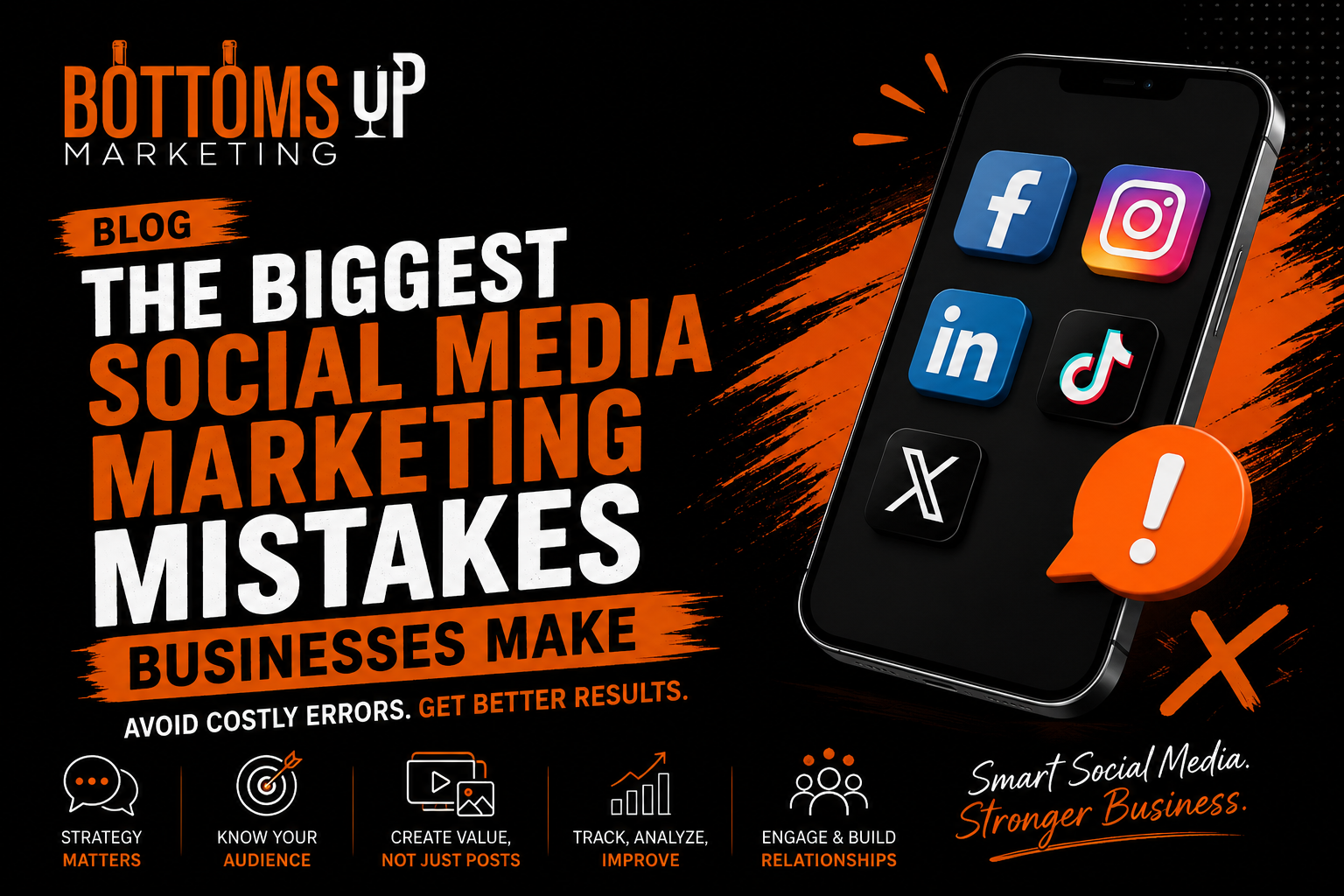
Let’s examine the biggest social media marketing mistakes businesses make and how to avoid them.
1. Posting Without a Clear Strategy
One of the most common mistakes is creating content without a defined goal. Businesses often post randomly whenever they have time, leading to inconsistent messaging and poor performance.
Before publishing content, ask yourself:
- What is the goal of this post?
- Who is the target audience?
- What action should viewers take?
A documented social media strategy creates consistency and helps every piece of content support broader business objectives.
2. Ignoring Audience Needs
Many businesses focus too much on talking about themselves rather than addressing customer interests.
Your audience cares about solutions, education, entertainment, and value. If your content doesn’t provide any of those things, engagement will likely remain low.
Take time to understand your audience’s challenges, preferences, and buying behavior. The more relevant your content is, the more likely people are to interact with it.
3. Being Too Promotional
Social media users don’t log in hoping to see endless advertisements.
When every post is focused on selling, followers often tune out or unfollow the brand entirely.
Instead, focus on creating a healthy balance between promotional and educational content. Share tips, industry insights, customer success stories, and behind-the-scenes content that helps build trust and credibility.
4. Inconsistent Posting
Many businesses start with enthusiasm but eventually stop posting regularly.
Social media algorithms favor consistency. Long periods of inactivity can reduce visibility and audience engagement.
Creating a content calendar helps maintain a steady publishing schedule and ensures your brand remains visible throughout the year.
5. Overlooking Video Content
Video continues to dominate social media platforms because it captures attention quickly and encourages engagement.
Businesses that rely exclusively on static images and text often miss opportunities to reach larger audiences.
Short-form videos, tutorials, product demonstrations, customer testimonials, and educational content can significantly improve performance across multiple platforms.
6. Failing to Engage With Followers
Social media is designed for interaction, not one-way communication.
Many brands publish content but rarely respond to comments, direct messages, or customer questions.
When businesses actively engage with followers, they build stronger relationships and increase customer trust.
Responding promptly to comments and messages demonstrates that your brand values its audience.
7. Using Identical Content Across Every Platform
Each social platform attracts different users with different expectations.
Content that performs well on Instagram may not perform as effectively on LinkedIn or Facebook.
Instead of posting identical content everywhere, tailor your messaging, format, and tone to fit each platform’s audience.
This approach typically produces higher engagement and better overall results.
8. Ignoring Performance Data
Many businesses never review their social media analytics.
Without data, it’s impossible to know which content drives engagement, website traffic, or conversions.
Important metrics to track include:
- Reach
- Engagement rate
- Click-through rate
- Website visits
- Lead generation
- Conversion rate
Regular analysis helps identify opportunities for improvement and supports more informed marketing decisions.
9. Inconsistent Branding
Strong branding helps customers recognize and remember your business.
When visual elements, messaging, or tone vary significantly across platforms, it can create confusion and weaken brand identity.
Maintain consistency in:
- Logo usage
- Brand colors
- Typography
- Messaging
- Voice and tone
A recognizable brand creates trust and improves long-term marketing effectiveness.
10. Neglecting Local Marketing Opportunities
Many businesses focus on broad audiences while overlooking nearby customers.
Local targeting can be extremely effective for businesses that serve specific geographic areas.
Location tags, community partnerships, local hashtags, and event promotions help increase visibility among potential customers in your area.
For businesses serving beverage retailers, a well-planned Liquor Store Social Media strategy can strengthen community engagement and increase local awareness.
11. Not Driving Traffic to Your Website
Social media should support your overall marketing ecosystem.
While engagement is important, businesses should also encourage users to visit their website, read blog content, request consultations, or make purchases.
Every social media profile should include clear pathways that guide users toward meaningful business actions.
12. Trying to Manage Everything Alone
Social media marketing requires expertise, consistency, content creation, audience management, and ongoing optimization.
Many business owners attempt to handle everything internally while managing day-to-day operations.
As a result, marketing efforts often become inconsistent and less effective.
Working with experienced professionals can help businesses create stronger campaigns, save time, and achieve better outcomes.
The Importance of Social Media for Business Growth
When managed correctly, social media can become one of the most effective channels for attracting new customers and building brand loyalty.
It allows businesses to:
- Build awareness
- Increase engagement
- Generate leads
- Drive website traffic
- Strengthen customer relationships
- Support sales growth
For companies operating in specialized industries, including those focused on digital marketing for liquor stores, social media can provide a valuable opportunity to connect with highly targeted audiences and strengthen market presence.
How Bottoms Up Marketing Helps Businesses Succeed
At Bottoms Up Marketing, we help businesses create social media strategies that generate measurable results.
Our team focuses on building customized campaigns designed to increase visibility, improve engagement, and drive business growth.
From content creation and audience engagement to advertising and performance optimization, we help businesses maximize the value of their social media investment.
Rather than chasing vanity metrics, we focus on strategies that contribute directly to real business objectives.
Final Thoughts
Social media marketing success doesn’t happen by accident.
Businesses that avoid common mistakes and commit to a strategic, customer-focused approach consistently achieve better results.
By understanding your audience, maintaining consistency, creating valuable content, and monitoring performance, you can turn social media into a powerful growth engine for your business.
Whether you’re looking to increase brand awareness, generate leads, or strengthen customer relationships, avoiding these common mistakes will help you achieve stronger and more sustainable results.
Frequently Asked Questions (FAQs)
1. What is the biggest mistake businesses make on social media?
The biggest mistake is posting without a clear strategy. Many businesses create content inconsistently without defined goals, audience targeting, or performance tracking. A successful social media strategy should align with overall business objectives and focus on delivering value to the audience.
2. How often should a business post on social media?
The ideal posting frequency depends on the platform and audience. However, consistency is more important than volume. Most businesses benefit from posting several times per week while maintaining a regular schedule that keeps followers engaged.
3. Why isn’t my social media generating leads?
There are several possible reasons, including poor audience targeting, weak calls-to-action, inconsistent posting, lack of engagement, or content that doesn’t address customer needs. Reviewing analytics can help identify where improvements are needed.
4. Is social media marketing important for small businesses?
Yes. Social media allows small businesses to increase brand awareness, connect with local customers, build trust, and generate leads without requiring the large budgets often associated with traditional advertising.
5. Which social media platform is best for businesses?
The best platform depends on your target audience and industry. Instagram and Facebook work well for visually driven businesses, LinkedIn is effective for B2B companies, and TikTok can be highly successful for brands targeting younger audiences.
6. How can businesses increase engagement on social media?
Businesses can improve engagement by creating valuable content, posting consistently, responding to comments and messages, using video content, asking questions, and encouraging user interaction through polls, contests, and community discussions.
7. Should businesses use paid social media advertising?
Organic social media is valuable, but paid advertising can significantly increase reach, generate leads, and drive conversions. A balanced strategy that combines organic content with targeted advertising often produces the best results.
