Running a liquor store today involves more than stocking popular brands and waiting for customers to walk through the door. Shoppers increasingly use Google, social media, reviews, and websites to discover local businesses before deciding where to shop. This makes a strong online presence an important part of building a successful retail business.
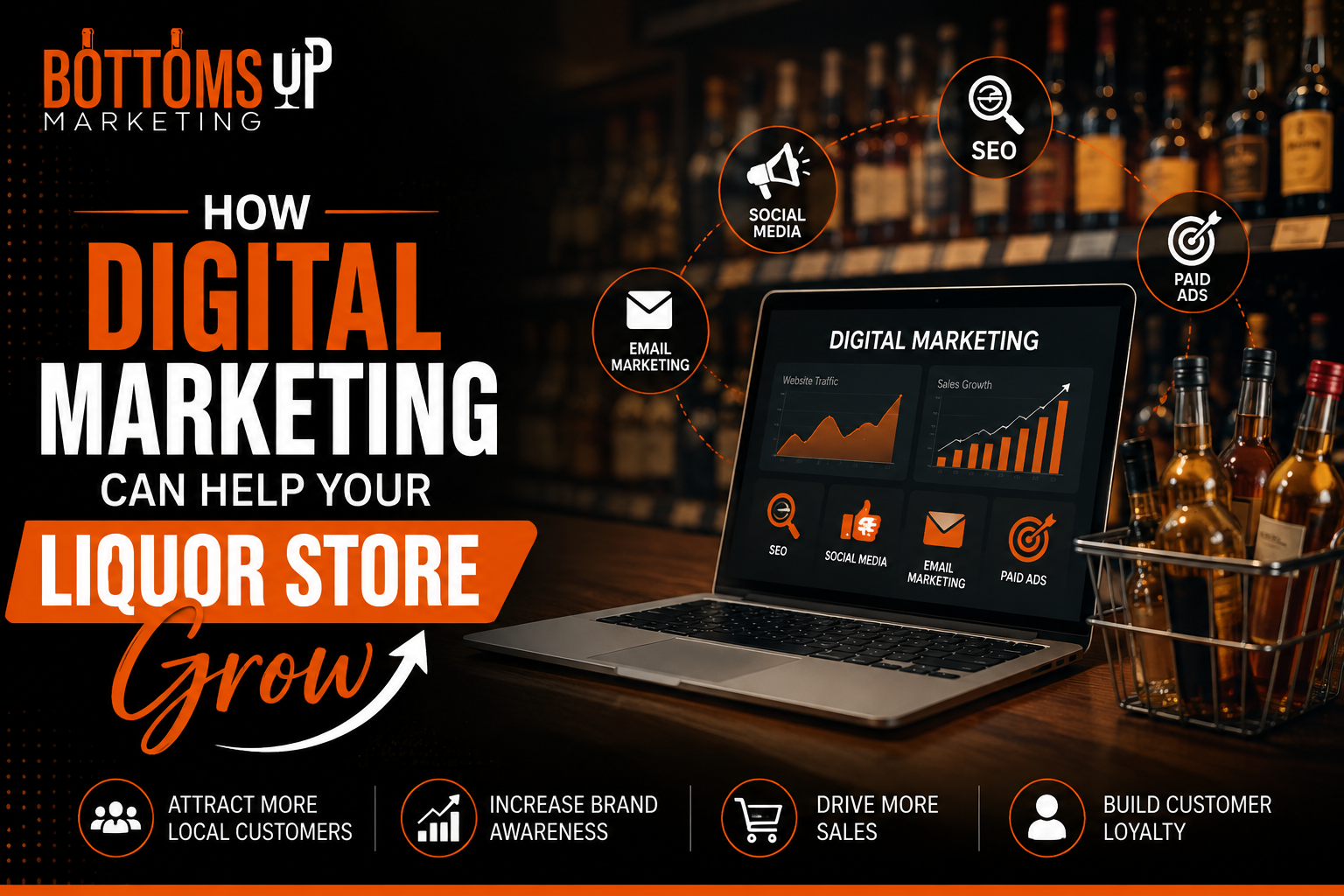
A well-planned digital marketing strategy can help your liquor store become more visible, connect with nearby customers, strengthen its reputation, and encourage repeat business. From local SEO and social media to email marketing and a conversion-focused website, several digital channels can work together to support long-term growth.
Why Digital Marketing Matters for Liquor Stores
Customers often search online when they need to find a nearby liquor store, compare businesses, check operating hours, read reviews, or learn more about a store. If your business does not appear prominently when those searches happen, potential customers may choose a competitor instead.
Digital marketing helps your store stay visible throughout the customer journey. Instead of relying only on traditional advertising or foot traffic, you can use online channels to reach people who are actively looking for businesses like yours.
The biggest advantage is that digital marketing can combine visibility with measurable results. You can evaluate website traffic, search visibility, engagement, calls, directions, and other performance indicators to understand what is working.
1. Improve Your Local SEO Visibility
Local SEO should be a major part of any liquor store marketing strategy. When someone searches for terms such as “liquor store near me” or “liquor store in [city],” you want your business to have a strong chance of appearing in relevant local results.
Local SEO involves optimizing your website and online business information so search engines can better understand your location and services.
Important areas include your business name, address, phone number, location pages, website content, local citations, and customer reviews.
Creating useful content around your local market can also help. For example, a liquor store could publish articles about choosing wines for special occasions, understanding different spirits, or planning beverages for a permitted event.
2. Optimize Your Google Business Profile
Your Google Business Profile is one of the most important online assets for a local retail business. Google says Business Profiles can help businesses appear on Google Search and Maps, while allowing them to manage information such as photos, reviews, and business details.
For a liquor store, accurate information is especially important. Customers may search specifically for your store’s location, phone number, hours, or other basic details before visiting.
Keep your profile information accurate and consistent with your real-world business. Google recommends using an accurate business name, precise address, appropriate categories, and correct customer-facing hours.
Regularly monitoring your profile can also help you identify outdated information and respond to customer feedback.
3. Build a Professional Website
Your website is your digital storefront. It should quickly tell visitors who you are, where you are located, what makes your store different, and how they can contact you.
A strong liquor store website should be:
- Easy to navigate
- Mobile-friendly
- Fast-loading
- Clear about location and hours
- Easy to contact
- Designed around local search intent
- Consistent with your brand
You can also create dedicated pages for locations, services, events, or specialty offerings where appropriate.
The goal is not simply to have a website. The goal is to create a useful online experience that gives potential customers a reason to choose your store.
4. Use Social Media to Build Awareness
Social media gives liquor stores an opportunity to showcase their personality and connect with their local community.
Instead of treating social media as a constant sales channel, focus on creating useful and engaging content. You might share store updates, behind-the-scenes content, educational information, seasonal themes, staff highlights, or visually appealing photography.
For example, a wine-focused store could create educational posts explaining the differences between wine varieties. A specialty spirits retailer could introduce customers to different categories and producers.
Consistent posting helps keep your business recognizable when customers are ready to shop.
5. Encourage and Manage Customer Reviews
Online reviews can influence whether a potential customer chooses your business. A store with a strong collection of genuine, recent reviews can create confidence before someone visits.
Make customer service a priority and encourage satisfied customers to share their honest experiences through appropriate channels.
It is equally important to respond professionally to reviews. Thank customers for positive feedback and address negative experiences respectfully.
Google prohibits fake engagement, including reviews that do not represent genuine customer experiences or reviews obtained through incentives.
That means your review strategy should always focus on authentic customer feedback rather than shortcuts.
6. Use Email Marketing to Stay Connected
Email marketing can help turn one-time shoppers into returning customers.
With appropriate customer permission and compliance with applicable laws, a liquor store can use email to share useful updates, educational content, store news, seasonal information, and other relevant communications.
The key is to provide value rather than sending repetitive promotional messages.
Segmenting your audience can make campaigns more relevant. For example, customers interested in wine may appreciate different content from customers interested in craft spirits.
7. Consider SMS Marketing Carefully
SMS Marketing can be another way to maintain customer relationships, but it requires careful attention to consent, applicable laws, and platform policies.
When used appropriately, text messaging can support timely communication with customers who have opted in. The content should be useful, relevant, and compliant with applicable regulations.
Because alcohol is an age-restricted product, businesses should take extra care with audience targeting, consent, and legal requirements.
8. Create Helpful Content
Content marketing can help your store attract people before they are ready to visit.
Think beyond basic promotional content. Answer questions your customers actually ask.
Potential topics include:
Wine Education
Explain wine varieties, tasting terminology, food pairings, and storage basics.
Spirits Education
Create beginner-friendly guides explaining different spirit categories and characteristics.
Seasonal Content
Publish useful content around holidays, celebrations, and seasonal shopping occasions while following applicable advertising and alcohol regulations.
Local Content
Create content relevant to your community and local customers.
Helpful content can bring organic traffic to your website while positioning your business as a knowledgeable local resource.
9. Use Professional Photography and Video
Liquor stores are highly visual businesses. Quality photography can make your website and social media presence more appealing.
Professional images can showcase your storefront, interior, team, and overall shopping experience.
Short-form video can also help introduce your brand and give potential customers a better understanding of what makes your store different.
10. Measure Your Digital Marketing Results
One of the biggest benefits of digital marketing is the ability to measure performance.
Track metrics such as:
- Organic website traffic
- Local search visibility
- Google Business Profile interactions
- Phone calls
- Website inquiries
- Direction requests
- Review growth
- Social media engagement
- Email engagement
The right metrics depend on your goals. A local liquor store may care more about calls, direction requests, local visibility, and in-store activity than simply chasing website traffic.
Build a Digital Strategy That Supports Long-Term Growth
Digital marketing is not a single tactic. Local SEO, Google Business Profile optimization, website development, social media, content marketing, reviews, email, and other channels can work together to create a stronger customer journey.
For liquor stores competing in crowded local markets, the objective is simple: be visible when customers are searching, provide useful information, build trust, and make it easy for people to choose your business.
With a consistent strategy and regular performance tracking, digital marketing can become a valuable part of your liquor store’s long-term growth plan.
FAQs
Is digital marketing effective for liquor stores?
Yes. Digital marketing can help liquor stores improve local visibility, build brand awareness, connect with customers, and strengthen their online reputation when strategies are implemented consistently and in compliance with applicable regulations.
What is the best digital marketing strategy for a liquor store?
Local SEO and Google Business Profile optimization are strong foundations for a local liquor store. These can be supported by a professional website, reviews, social media, content marketing, and customer retention strategies.
Why does local SEO matter for liquor stores?
Liquor stores primarily serve customers within a specific geographic area. Local SEO can help your business become more visible to people searching for relevant stores and services in your market.
How can social media help a liquor store?
Social media can help a liquor store build awareness, showcase its brand, educate customers, and maintain relationships with its local community. Content should always follow applicable alcohol advertising and platform rules.
How long does digital marketing take to produce results?
Results vary depending on competition, location, website condition, existing online presence, and strategy. SEO generally requires consistent effort over time, while some paid or social campaigns can generate visibility more quickly.
Should a liquor store invest in a professional website?
Yes. A professional, mobile-friendly website can provide customers with important business information while supporting local SEO, content marketing, and other digital marketing activities.
