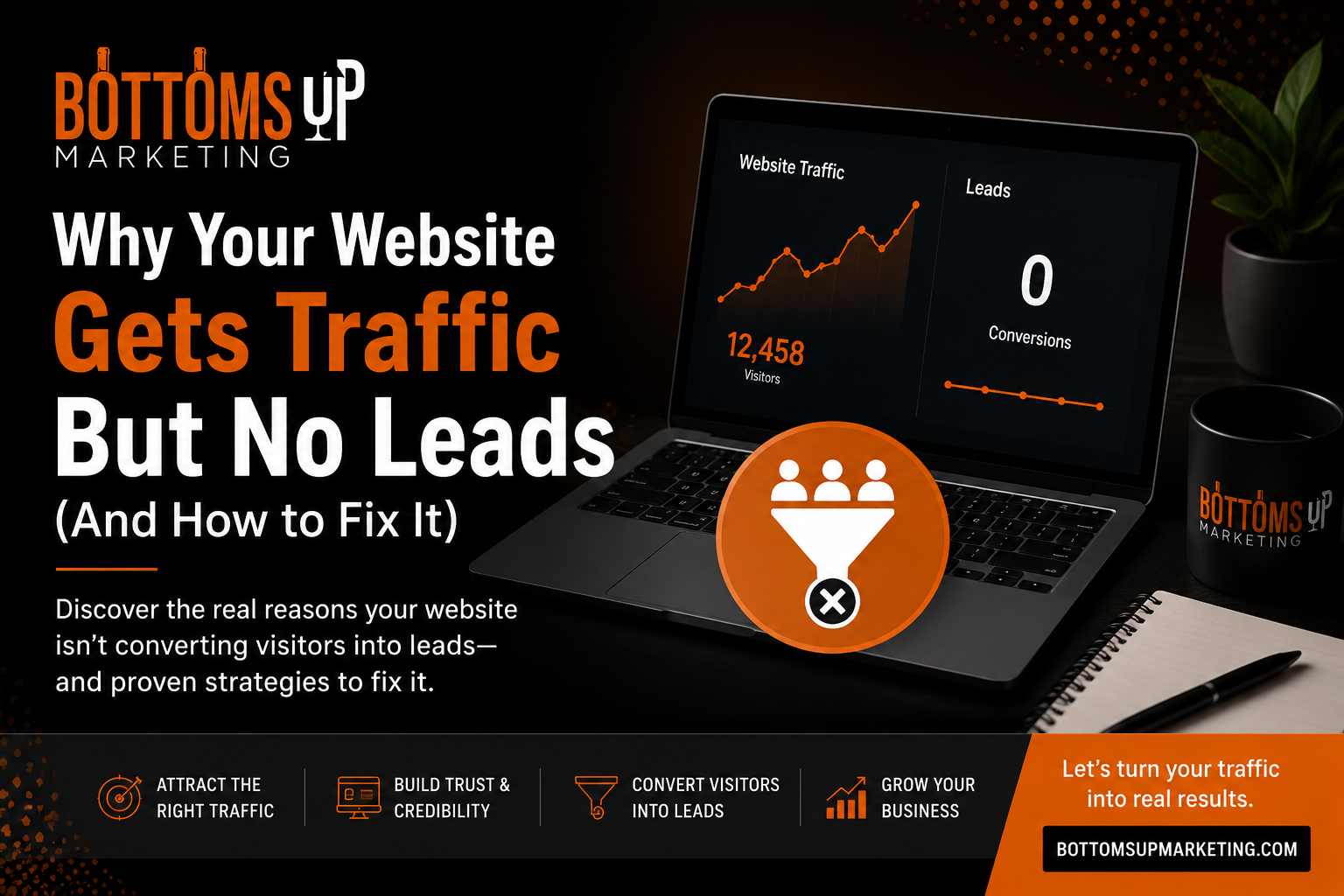
Getting traffic to your website is exciting. Seeing hundreds or even thousands of visitors every month can make it feel like your digital marketing efforts are paying off. But what happens when those visitors don’t turn into leads, inquiries, or sales?
This is one of the most common frustrations business owners face. They invest in SEO, social media, paid advertising, and content marketing, only to discover that their website isn’t generating the results they expected.
The truth is that traffic alone doesn’t grow a business. Conversions do.
If your website attracts visitors but struggles to convert them into customers, you’re not alone. In this guide, we’ll explore the most common reasons your website gets traffic but no leads and more importantly, how to fix them.
Understanding the Difference Between Traffic and Conversions
Many business owners focus solely on increasing website traffic. While traffic is important, it represents only the first step in the customer journey.
Think of your website like a retail store. Hundreds of people may walk through the door every day, but if nobody buys anything, the business still has a problem.
The same principle applies online.
A successful website should:
- Attract the right audience
- Build trust with visitors
- Clearly communicate value
- Encourage visitors to take action
- Convert traffic into leads and customers
If any of these elements are missing, your conversion rate will suffer.
1. You’re Attracting the Wrong Audience
One of the biggest reasons websites fail to generate leads is poor audience targeting.
Many businesses focus on ranking for high-volume keywords without considering user intent. As a result, they attract visitors who are researching, browsing, or looking for information rather than people ready to buy.
For example, a liquor retailer may rank for broad terms like “best whiskey brands” and generate substantial traffic. However, visitors searching for educational content may not be ready to purchase or contact the business.
Instead, targeting commercial-intent keywords such as “premium liquor delivery near me” or “Liquor Store Website Design services” can attract visitors who are closer to making a decision.
How to Fix It
- Analyze your top-performing pages in Google Analytics.
- Review keyword intent.
- Focus on transactional and commercial keywords.
- Create content specifically designed to attract qualified leads.
2. Your Website Doesn’t Build Trust
Visitors make decisions quickly. Research consistently shows that users form impressions about a website within seconds.
If your website looks outdated, loads slowly, or lacks credibility signals, visitors may leave before taking action.
This issue is especially common among local businesses and retailers. Whether you’re offering digital services or specialized solutions like Liquor Store Website Design, trust is critical.
Key Trust Elements Every Website Needs
- Professional website design
- Customer testimonials
- Case studies
- Secure HTTPS connection
- Clear contact information
- Google reviews
- Industry certifications
- Team information
When visitors trust your business, they’re significantly more likely to become leads.
3. Your Value Proposition Isn’t Clear
Many websites assume visitors understand what they offer. Unfortunately, most users won’t spend time figuring it out.
When someone lands on your homepage, they should immediately understand:
- What you do
- Who you help
- Why you’re different
- What action they should take next
If your messaging is vague, confusing, or filled with industry jargon, visitors will leave.
How to Fix It
Create a clear headline that answers these questions within seconds.
For example:
“We Help Liquor Stores Generate More Sales Through Professional Liquor store web design and Digital Marketing Solutions.”
Simple, specific messaging often outperforms clever marketing copy.
4. Your Website Loads Too Slowly
Website speed directly impacts conversions.
Modern consumers expect websites to load almost instantly. If your pages take too long to load, visitors may leave before seeing your content.
Slow websites create a poor user experience and can negatively affect SEO rankings as well.
Common Causes of Slow Websites
- Large image files
- Poor hosting
- Excessive plugins
- Unoptimized code
- Lack of caching
How to Fix It
- Compress images
- Upgrade hosting
- Remove unnecessary plugins
- Enable caching
- Optimize mobile performance
Even a one-second improvement in load speed can positively impact conversion rates.
5. Your Call-to-Action Is Weak
Many websites make visitors work too hard to take action.
Visitors shouldn’t have to search for your contact information or wonder what to do next.
Every page should include a clear call-to-action (CTA).
Examples include:
- Request a Quote
- Schedule a Consultation
- Get a Free Audit
- Contact Our Team
- Start Your Project
A strong CTA guides visitors toward the next step in the buying process.
Best Practices for CTAs
- Make them visible above the fold
- Use action-oriented language
- Repeat them throughout the page
- Keep forms short and simple
The easier it is to convert, the more leads you’ll generate.
6. Your Website Isn’t Mobile-Friendly
More than half of web traffic now comes from mobile devices.
If your website doesn’t function properly on smartphones and tablets, you’re likely losing a significant number of potential leads.
Visitors expect mobile websites to be:
- Fast
- Easy to navigate
- Easy to read
- Optimized for touchscreens
Poor mobile experiences often lead to high bounce rates and low conversions.
How to Fix It
Regularly test your website on multiple devices.
Pay special attention to:
- Mobile navigation
- Contact forms
- Button placement
- Page speed
- Text readability
A mobile-first approach can dramatically improve lead generation.
7. Your Content Doesn’t Address Customer Pain Points
Many businesses create content about themselves instead of focusing on their customers.
Visitors care less about your company history and more about how you can solve their problems.
Effective content answers important questions and demonstrates expertise.
For example, if you’re targeting liquor retailers, content topics could include:
- How Liquor Store Website Design Impacts Online Sales
- Essential Features Every Modern Liquor Store Website Needs
- SEO Strategies for Liquor Retailers
- Local Marketing Tips for Liquor Stores
When your content solves real problems, visitors are more likely to trust your business and reach out.
8. You’re Not Capturing Leads Effectively
Not every visitor is ready to buy immediately.
Many businesses lose potential customers because they don’t have a lead capture strategy.
Even if visitors aren’t ready to contact you today, they may be interested in learning more.
Lead Capture Methods
- Newsletter subscriptions
- Free guides
- Website audits
- Downloadable resources
- Free consultations
- Email courses
Offering something valuable in exchange for contact information helps nurture prospects until they’re ready to buy.
9. Your Forms Are Too Complicated
Long forms create friction.
Every additional field increases the likelihood that visitors will abandon the process.
Many businesses ask for unnecessary information before establishing trust.
Keep Forms Simple
Ask only for essential details:
- Name
- Phone number (if necessary)
- Brief project information
Reducing form complexity often leads to higher conversion rates.
10. You’re Not Measuring Conversion Data
Many business owners track traffic but ignore conversion metrics.
Without data, it’s impossible to know why visitors aren’t becoming leads.
Important metrics to monitor include:
- Conversion rate
- Bounce rate
- Time on page
- Form submissions
- CTA clicks
- Landing page performance
Data-driven decisions lead to better marketing results.
Why Professional Website Design Matters
Your website is often the first interaction potential customers have with your brand.
An outdated or poorly designed website can undermine even the best marketing campaigns.
Whether you’re a local retailer, service provider, or business specializing in Liquor Store Website Design, user experience plays a critical role in generating leads.
A professionally designed website should:
- Reflect your brand
- Build trust
- Communicate value
- Guide visitors toward conversion
- Support SEO performance
Businesses that invest in strategic web design typically experience stronger lead generation and higher customer acquisition rates.
How Bottoms Up Marketing Helps Businesses Generate More Leads
At Bottoms Up Marketing, we understand that traffic alone isn’t enough. Our focus is helping businesses transform website visitors into qualified leads and paying customers.
Our team combines:
- Strategic website design
- Conversion rate optimization
- SEO
- Content marketing
- Local search marketing
- Industry-specific solutions including Liquor store web design
We don’t just build websites we create growth-focused digital experiences designed to generate measurable results.
Whether your website needs a complete redesign, improved SEO, or better conversion strategies, our goal is simple: help your business turn more traffic into revenue.
Final Thoughts
Getting website traffic is only half the battle. If visitors aren’t converting into leads, there’s usually an underlying issue that needs attention.
From poor targeting and weak messaging to slow loading speeds and ineffective calls-to-action, several factors can prevent your website from achieving its full potential.
The good news is that these problems can be fixed.
By focusing on user experience, conversion optimization, trust-building, and strategic content creation, businesses can transform their websites from traffic generators into lead-generation machines.
If your website is attracting visitors but not producing results, it may be time to evaluate what’s holding it back and take action before more opportunities are lost.
